183,382
Road-accident deaths
People died in road accidents in India in 2025—an average of about 502 deaths every day. In the aftermath of an accident, relevant medical details and emergency contacts may be useful to those providing care.
A simple card for critical moments
In an emergency, every second counts. MeCard keeps your essential medical details and emergency contacts close at hand, helping others identify you and reach the right people when you cannot speak for yourself.
A Medical Emergency Card keeps essential information with you when you may be unable to communicate.
Every year, Indian families experience the sudden loss of someone they love. Road accidents, strokes, heart attacks and other medical emergencies can leave a person unable to explain their medical history or contact their family. Could having essential information readily available make a difference?
183,382
People died in road accidents in India in 2025—an average of about 502 deaths every day. In the aftermath of an accident, relevant medical details and emergency contacts may be useful to those providing care.
~1.03 million
Global Burden of Disease estimates indicate that around 1.03 million people died from stroke in India in 2023. Stroke is a medical emergency where rapid assessment and treatment are critical.
Source: Global Burden of Disease 2023 estimates, analysed in a published study.
~3.17 million
India's estimated cardiovascular disease deaths for 2024 included deaths from serious conditions affecting the heart and blood vessels. Medical history and current medications may be relevant during treatment.
Source: World Heart Federation, using IHME data (2024 estimate).
Note: Stroke is included within cardiovascular disease in some statistical classifications, so these figures should not be added together. Stroke and cardiovascular figures are estimates; road-accident figures are reported counts.
We are not suggesting that a MECard could have prevented all—or even most—of these deaths. Many emergencies are fatal despite the best possible care.
But what if having essential medical information readily available could have helped save even a few lives?
If someone is unconscious or unable to speak, a MECard may help others find relevant information about medical conditions, allergies, medications and emergency contacts. We cannot know how many outcomes might have been different, but the possibility is worth taking seriously.
MECard cannot replace emergency medical care. It is one practical way to be better prepared for the unexpected.
We do not save or share your medical information. Your MeCard is created in your browser, and your medical information is not uploaded to or stored in our server database.
Your health information. Your privacy. Your control.
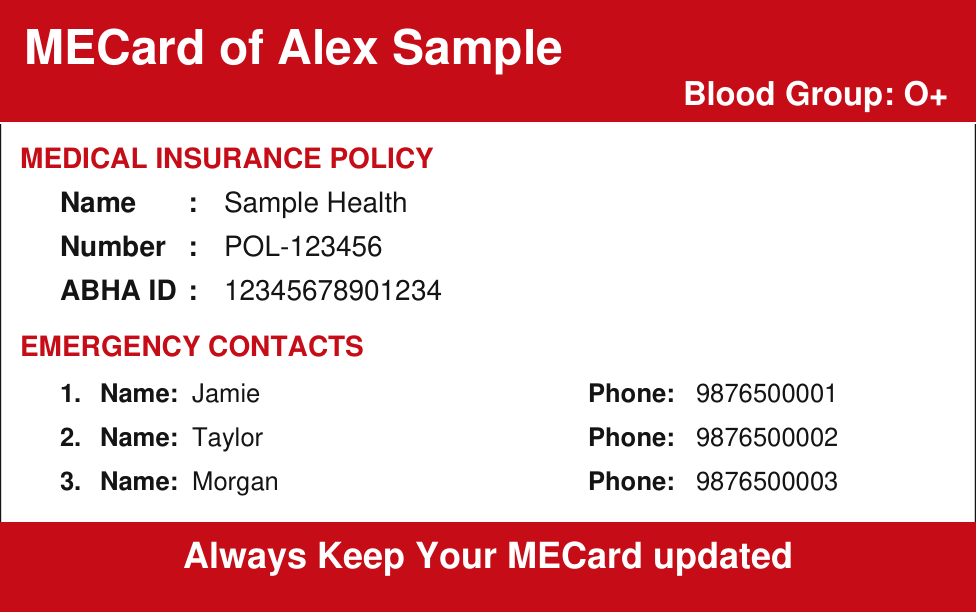
Name and blood group are visible without needing a phone.
Each emergency contact is recorded by name and phone number.
The doctor's contact is immediately available.
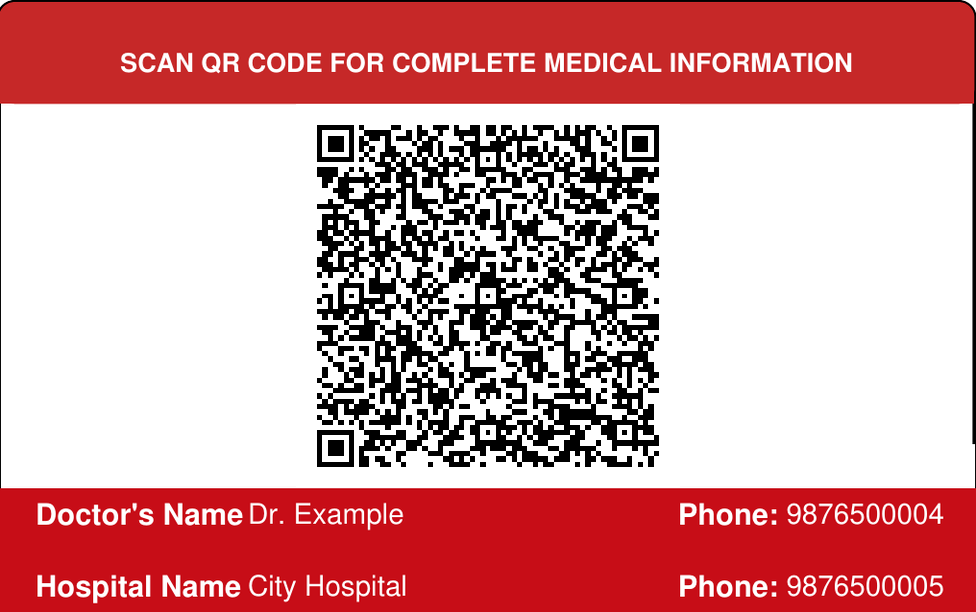
The reverse side uses a QR code for additional medical information.
The card remains useful if a phone is locked, damaged or unavailable.
Designed as a compact card for everyday use.
Keep it in your wallet, purse or ID holder.
See the person's name, blood group, three emergency contacts and doctor's number.
Access the detailed medical profile when appropriate.
We sincerely pray that you will never have to use your MECard. We pray that you and your loved ones will remain safe and enjoy good health.
But if disaster strikes, we also pray that you will not be missing a MECard.
We cannot always prevent an emergency, but we can prepare for one. We hope your MECard will never be needed. If the unexpected happens, may it help make important information available when it matters most.
You may never need it, but having essential information with you can help others know who you are and whom to contact.
Create Your MeCard